Why Pets Seem to Know When You're About to Leave
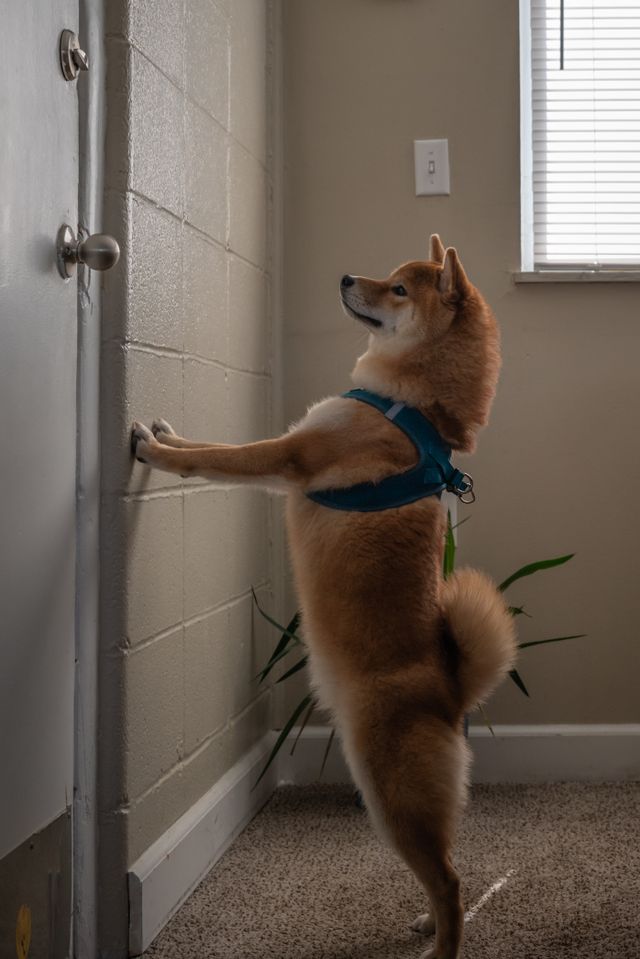
- Pets anticipate departures by recognizing learned cues and routines
- not by reading intentions
- and this same process can tip into separation anxiety in some dogs.
You grab your keys, and before you've even reached the door, your dog is already there — ears low, eyes fixed on you. Your cat, asleep moments ago, quietly vanishes under the bed. It can feel like your pet has read your mind. It hasn't. What's actually happening is a well-documented learning process, not intuition.
The Science of Associative Learning
Pets do not understand a spoken plan to leave the house. What they understand is a sequence. Certain small actions — picking up keys, putting on shoes, filling a bag, walking toward a particular door — have, over hundreds of repetitions, reliably come right before you walk out. This is associative learning, the same basic mechanism behind Ivan Pavlov's famous experiments, in which a neutral signal became a predictor of what followed it.
- Dog Care Tips
- Cat Health Guide
- Pet Nutrition Basics
- Training Advice
- Understanding Pet Anxiety
Pets aren't reading your mind. They're reading your routine.
None of these actions means anything to a pet on their own. But once a cue has consistently preceded departure, the brain links the two, and the pet starts reacting to the cue itself — not the actual moment you leave.
Why Dogs React Before You've Even Moved
Veterinary behaviorists refer to these signals as pre-departure cues — anything that reliably tells a dog a departure is coming, from the sound of keys to a specific pair of shoes. For dogs prone to separation-related distress, these cues alone can trigger anxiety well before the door actually opens, because the cue and the absence have become tightly linked in memory.
Research that filmed dogs left home alone found that behavioral signs often begin within minutes of departure — vocalizing at a mean of roughly three minutes in, and destructive behavior around the seven-minute mark in dogs with separation-related behaviors. That speed suggests the anticipation, and the stress response tied to it, was often already building before the owner walked out the door.
Scent, Sound, and the Limits of What We Know
Dogs rely heavily on smell, and some researchers in canine cognition believe subtle scent changes tied to a person's movement or stress hormones may also feed into a dog's anticipation, though this remains an area of ongoing study rather than a settled explanation. Sound is better understood: distinct cues like keys jingling, a specific alarm, or footsteps toward the front door become just as predictive as anything visual, especially for a pet in another room.
The overlap of scent, sound, and sight is likely why pets' predictions can seem almost eerily accurate.
Cats Notice Patterns Too
Cats are just as capable of forming these associations, even if their response looks different. A cat that disappears before a suitcase comes out, or that stations itself by a window before a car typically pulls out of the driveway, is running the same basic process as a dog — cause linked to effect, learned through repetition. Cats tend to withdraw rather than perform, which is why their anticipation is often mistaken for indifference.
When Anticipation Becomes Something More
Recognizing a cue calmly is not a problem. It becomes one when it's paired with real distress. Veterinary behaviorists distinguish ordinary anticipation from separation anxiety, a recognized clinical condition, by looking for signs such as:
- Excessive vocalizing after you've left
- Destructive behavior limited to when you're gone
- Pacing, drooling, or trembling
- Attempts to escape confinement
- House-soiling that only happens during absences
If these show up consistently, it's worth a conversation with a veterinarian or a certified veterinary behaviorist — separation anxiety is treatable, but punishment after the fact does not help and can make the anxiety worse.
What This Means for You and Your Pet
Understanding that this is learned behavior, not a sixth sense, changes what you can actually do about it. Varying your pre-departure routine, practicing cues like picking up your keys without leaving, and keeping goodbyes low-key can all reduce the emotional weight a pet attaches to those signals over time.
The next time your pet meets you at the door before you've said a word, remember: that response was built one repeated routine at a time — a quiet reminder of just how closely your pet is paying attention to the rhythm of your everyday life.
Frequently Asked Questions
Do pets actually know when I'm about to leave?
They're responding to learned cues, like keys or shoes, that have reliably preceded past departures, not to an understanding of your plans. ;
Is my dog's reaction to me leaving separation anxiety?
Calm anticipation is normal, but signs like excessive vocalizing, destructive behavior, or pacing after you leave may point to separation anxiety and are worth discussing with a vet. ;
Can cats sense when I'm about to leave too?
Yes, cats form the same kind of cue-based associations as dogs, though they tend to withdraw quietly rather than show it outwardly. ;
Can I reduce my pet's stress around departures?
Practicing departure cues without actually leaving, keeping goodbyes low-key, and offering distractions like puzzle feeders can help. ;
Why does my dog react to my keys before I even move toward the door?
Keys have become what behaviorists call a pre-departure cue — a signal so consistently linked to your leaving that your dog reacts to it directly.
Sources
- Veterinary behavior research
- canine cognition studies
- video-based separation-anxiety research