Can Your Pet Sense Bad Weather Before It Hits?
- Dogs and cats can likely detect early storm cues such as distant thunder
- falling pressure
- and changes in scent. Their reactions are real
- but science has not fully proven they predict weather.
It is a quiet, sunny afternoon, and your dog has started pacing. He pants, follows you from room to room, and refuses to settle. Your cat has vanished under the bed. Twenty minutes later, the first low rumble of thunder rolls in from far away. Did your pets just predict the weather? It is a story many owners tell, and the science behind it is more interesting, and more uncertain, than you might expect.
What the Evidence Says (and What It Doesn't)
Let's be upfront: there are very few controlled studies showing that dogs and cats forecast storms. Most of what we have is owner reports and educated scientific guesses. But those guesses rest on real facts about how pets sense the world, and each one offers a believable explanation for why they often react before we do.
Hearing Beyond Our Range
Pets hear far more than we do. Humans top out at roughly 20,000 hertz, while dogs hear up to around 45,000 and cats up to around 64,000. Thunder also carries low-frequency energy that travels a long way. A pet may pick up distant rumbles, changes in wind, or other storm sounds minutes before they are loud enough for us to notice.
- Dog Care Tips
- Cat Health Guide
- Pet Nutrition
- Training Advice
- Pet Adoption Stories
Your pet isn't predicting the storm. It may simply be the first one in the house to hear it.
Pressure, Static, and Smell
Beyond sound, several other signals shift as a storm approaches, and pets may be sensitive to some of them:
- Barometric pressure usually falls before a storm, and animals may notice the change, in much the way some people feel it in their joints or head.
- Static electricity has been proposed as a trigger for storm fear. Veterinary behaviorist Nicholas Dodman has suggested that a build-up of static charge in a dog's coat could be uncomfortable, though this idea remains unproven.
- Scent is a likely clue too. Dogs have a remarkable sense of smell, and the damp, earthy air that arrives ahead of rain is a smell most of us only catch once the rain starts.
Most researchers think it is probably a combination of these cues, not any one of them.
A Lesson From the Birds
The best scientific evidence of animals sensing a storm comes from wild birds. In April 2014, researchers tracking golden-winged warblers with tiny geolocators noticed something striking: the birds left their breeding grounds in Tennessee and flew hundreds of miles away, apparently ahead of a major tornado outbreak. The study, published in Current Biology in 2015, suggested the birds may have detected infrasound, very low-frequency sound produced by severe storms, from a long way off.
It does not prove that dogs and cats do the same. But it shows that animals can sense approaching weather in ways that humans cannot.
When Instinct Becomes Anxiety
For many pets, the early warning is not the real problem. The storm itself is. Noise sensitivity and thunder fear are common in dogs, and they can grow worse over time if the fear is never addressed. Signs your pet is anxious include:
- Panting, pacing, or trembling
- Hiding, or pressing against you
- Drooling or yawning more than usual
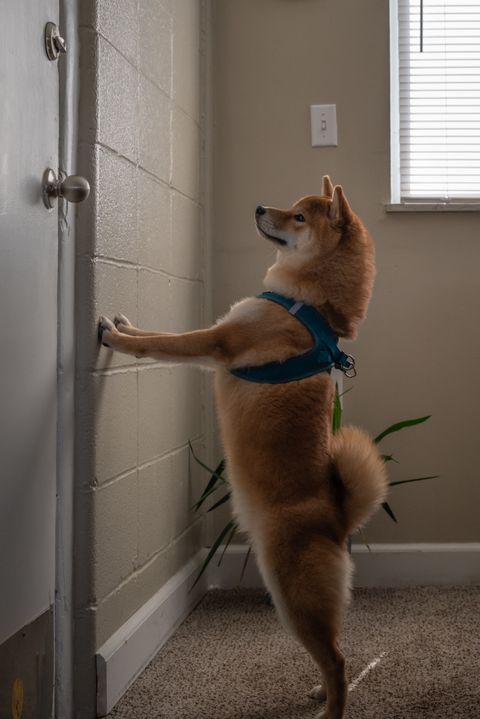
- Trying to escape through doors or windows
- Refusing food or treats
Cats tend to show stress more quietly, by hiding, freezing, flattening their ears, or going very still.
How to Help Your Pet Through a Storm
You can't stop the thunder, but you can make it less frightening:
- Offer a safe retreat: a quiet, interior room, a crate with a blanket over it, or a closet your pet already likes.
- Mask the noise: soft music, a fan, or a television can soften the rumbles.
- Stay calm yourself: pets read your mood, so a relaxed voice and normal routine help.
- Don't punish fear: scolding a frightened pet only adds to the stress.
- Try gentle pressure: some owners find snug-fitting wraps helpful, although the research on them is mixed.
- Build tolerance over time: gradual training with recorded storm sounds, ideally guided by a professional, can reduce fear.
Don't wait for a storm to start. Preparing a safe space in advance makes the whole experience easier for both of you.
When to Call the Vet
If your pet's reaction is severe, such as self-injury, destroyed doors, or panic that does not settle after the storm passes, talk to a veterinarian or a certified veterinary behaviorist. Anxiety linked to storms is treatable, and in some cases, medication or a structured behavior plan makes a big difference.
Reading the Signals
So can your pet sense bad weather before it hits? Quite possibly, thanks to sharp hearing, a powerful nose, and sensitivity to subtle changes in the air. Whether they truly predict a storm or just notice the first signs of one, they are telling you something worth paying attention to.
The next time your dog starts pacing on a calm afternoon, glance at the sky. He may not be a meteorologist, but he is certainly a very good listener.
Frequently Asked Questions
Can dogs sense storms before they arrive?
Many dogs seem to, likely by hearing distant thunder, noticing pressure changes, or smelling shifts in the air, though controlled studies are limited. ;
Why does my cat hide before a storm?
Cats often withdraw when something feels off. They may be reacting to sounds, pressure changes, or a tense household. ;
What are the signs of storm anxiety in pets?
Panting, pacing, trembling, hiding, drooling, and trying to escape are common signs in dogs, while cats tend to hide or freeze. ;
How can I help my pet during a thunderstorm?
Provide a quiet safe space, mask the noise, stay calm, avoid punishment, and talk to a vet if the fear is severe.
Sources
- Streby et al. 2015 (Current Biology)
- canine and feline hearing range research
- veterinary behaviorist commentary on noise and storm fear
- Nicholas Dodman storm anxiety research